WA’s three peak health sector unions have welcomed an audit of the Infant Child and Adolescent Taskforce, critiquing failures by the Mental Health Commission to implement reforms that would protect vulnerable children and their families.
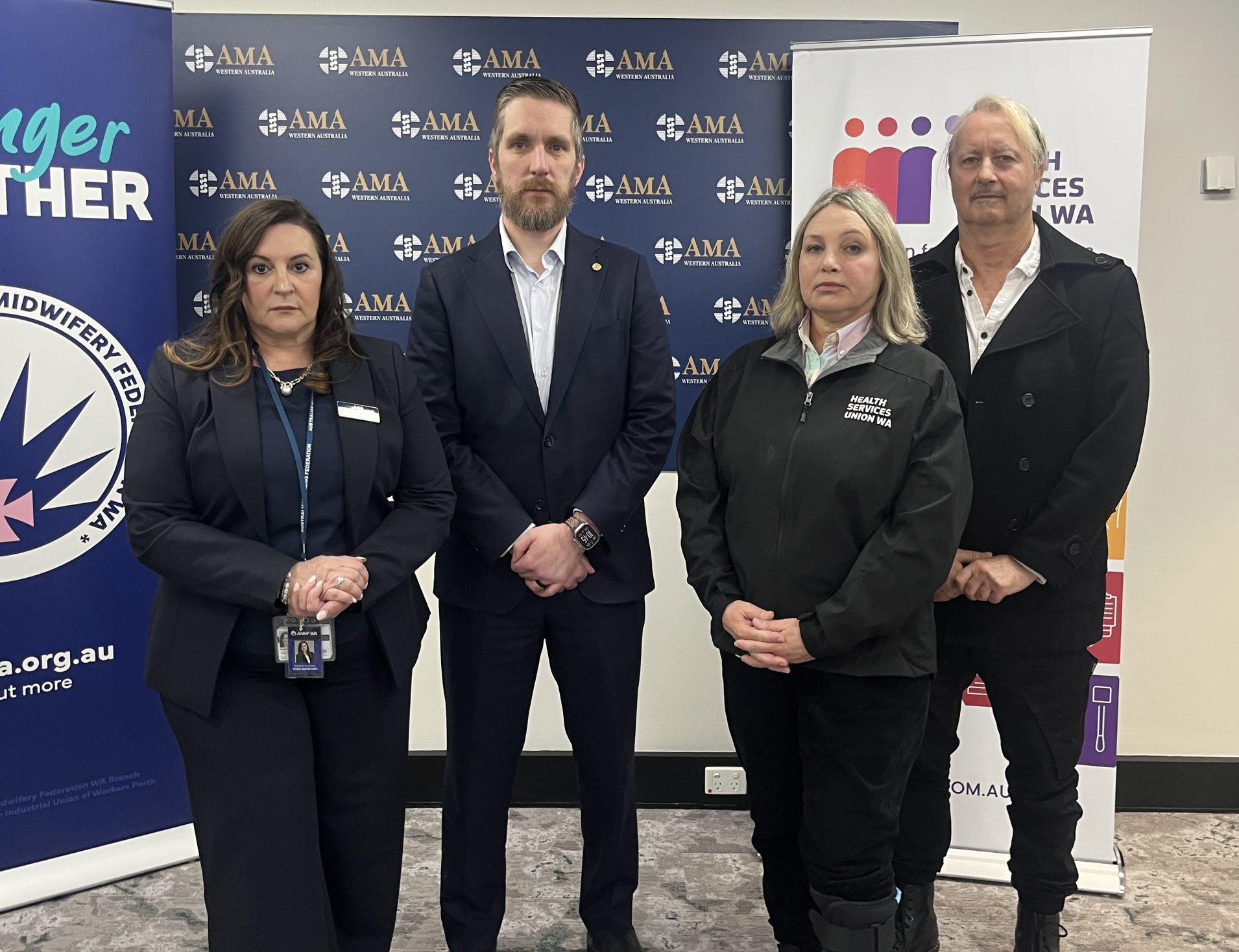
The Australian Medical Association (WA), Australian Nursing and Midwifery Federation WA (ANMF WA), and Health Services Union of WA (HSUWA) today said the Commission had only fully implemented one of the 32 recommendations that were delivered by the taskforce in 2021.
Union leaders said the findings confirmed what clinicians, families and frontline workers have been experiencing for years — that the system is fragmented, difficult to access and overly reliant on crisis care.
AMA (WA) President Dr Kyle Hoath drew on his own professional practice to reflect on the implications of the report.
Dr Hoath said behind every delay is a child or young person missing out on timely care. “As a psychiatrist, we know early intervention can change the course of a young person’s life,” Dr Hoath said.
“It is deeply concerning that these reforms have lost momentum and still cannot demonstrate meaningful outcomes for children and families.”
The Auditor General’s report found the reform had significant gaps and did not demonstrate clear accountability or measurable outcomes.
The health unions said they were now calling for urgent action, including the release of a comprehensive public implementation plan for all recommendations, with clear timelines, funding commitments, and accountable agencies.
Last week, the unions sent a joint letter to Child and Adolescent Health Service Chief Executive Valerie Buić, expressing significant concerns regarding patient care and safety and staff morale within CAMHS Community Clinics.
ANMF WA State Secretary Romina Raschilla said WA families and their clinicians deserved more support and to be genuinely consulted on any changes to the model of care.
“We want to see transparent public reporting, a dedicated governance structure, a properly funded workforce strategy, and a stronger focus on prevention and community-based care,” Ms Raschilla said.
“The current mental health services in WA cannot meet the rapidly growing demand. We need urgent action to also cater for the future needs of vulnerable children, adolescents and families.
“It’s critical that the Mental Health Commission works with Child and Adolescent Mental Health Service to prioritise the full implementation of the recommendations and listens to their clinicians operating on the frontline, to prevent further harm to patients and their families who rely on this vital service.”
While the report acknowledged some progress had been made in acute and crisis services — including expanded crisis response teams, union leaders said it was not enough to protect the community.
Health Services Union WA Secretary Naomi McCrae said it highlighted major concerns about workforce planning, with the audit finding that critical actions — such as aligning workforce capability with new models of care — have not been completed.
“You cannot transform child and adolescent mental health without the workforce to deliver it,” she said.
“Yet, there continues to be chronic underinvestment in staff.
“There is simply no excuse anymore; it must be a priority to employ the staff actually needed. Workforce shortages and understaffing directly impact access to care.”
Dr Hoath said too many families were navigating a confusing system. “A modern mental health system cannot be built around crisis care alone. These services should be the safety net, not the front door,” Dr Hoath said.
“This is not just a bureaucratic issue — it’s a failure to deliver vital services to some of the most vulnerable people in our community, who are only receiving help once a situation escalates to crisis.
“This report must be a turning point. Families and staff were promised transformation — now they deserve delivery.
“Western Australia does not need more commitments. It needs a system that works — one that is accessible, accountable and built around early intervention so children can get help when they need it most.”